Keurig Espresso | Is It Possible? Let’s Find Out!

In the bustling world of coffee enthusiasts, where the aroma of freshly ground beans and the hiss of steam wands fill the air, a curious question has emerged: Can the convenience-driven Keurig system truly produce a genuine espresso? This inquiry has sparked debates among casual sippers and connoisseurs alike, challenging the very definition of what constitutes an authentic espresso experience.
As we dive into this caffeinated conundrum, we’ll explore the intricate dance between pressure, temperature, and time that gives espresso its distinctive character. We’ll peel back the layers of Keurig’s technology, examining how this popular coffee machine attempts to replicate the complexity of traditional espresso extraction within the confines of a pod-based system.
Our journey will take us through blind taste tests, expert opinions, and even a few DIY hacks, all in pursuit of answering the burning question: Is Keurig espresso possible, or is it merely a clever imitation? Grab your favorite mug, and let’s embark on this flavorful exploration that might just reshape your morning coffee experience.
Understanding Espresso: The Gold Standard

Before we can determine whether Keurig can produce authentic espresso, we must first understand what defines this beloved coffee preparation. Espresso is not just a type of coffee; it’s a method of extraction that results in a concentrated shot of bold, complex flavors topped with a layer of creamy foam known as crema.
The Science of Espresso Extraction
At its core, espresso is the result of forcing hot water through finely ground coffee beans at high pressure. This process typically requires 9 bars of pressure (about 130 psi) and water heated to around 200°F (93°C). The extraction time is crucial, usually lasting between 25 to 30 seconds. This precise combination of factors results in the hallmark characteristics of espresso:
- Intensity: A concentrated flavor profile that captures the full spectrum of coffee notes.
- Body: A rich, almost syrupy mouthfeel.
- Crema: The golden-brown foam that sits atop the shot, created by emulsified oils.
Traditional espresso machines are designed with these parameters in mind, featuring powerful pumps, precise temperature controls, and portafilters that hold the ground coffee under pressure. The barista’s skill in grinding, tamping, and timing the shot plays a crucial role in the final quality of the espresso.
Keurig’s Coffee-Making Technology: A Different Approach
Keurig revolutionized the home coffee maker market with its pod-based system, prioritizing convenience and consistency. But how does this technology stack up against the demands of espresso production?
The K-Cup System: Convenience Meets Coffee
Keurig machines use pre-packaged K-Cups, which contain a measured amount of ground coffee. When inserted into the machine, needles puncture the top and bottom of the pod. Hot water is then forced through the grounds, and coffee drips into your waiting cup.
The key differences between this system and traditional espresso machines are:
- Pressure: Keurig machines typically operate at lower pressures, around 1-2 bars compared to the 9 bars required for espresso.
- Grind Control: Users are limited to the pre-ground coffee in the pods, which may not be fine enough for true espresso.
- Extraction Time: The brew time in a Keurig is often shorter than the optimal espresso extraction time.
These factors present significant challenges in replicating the espresso experience. However, Keurig has made attempts to bridge this gap with specialized machines and pods.
The Keurig K-Cafe: A Step Towards Espresso?
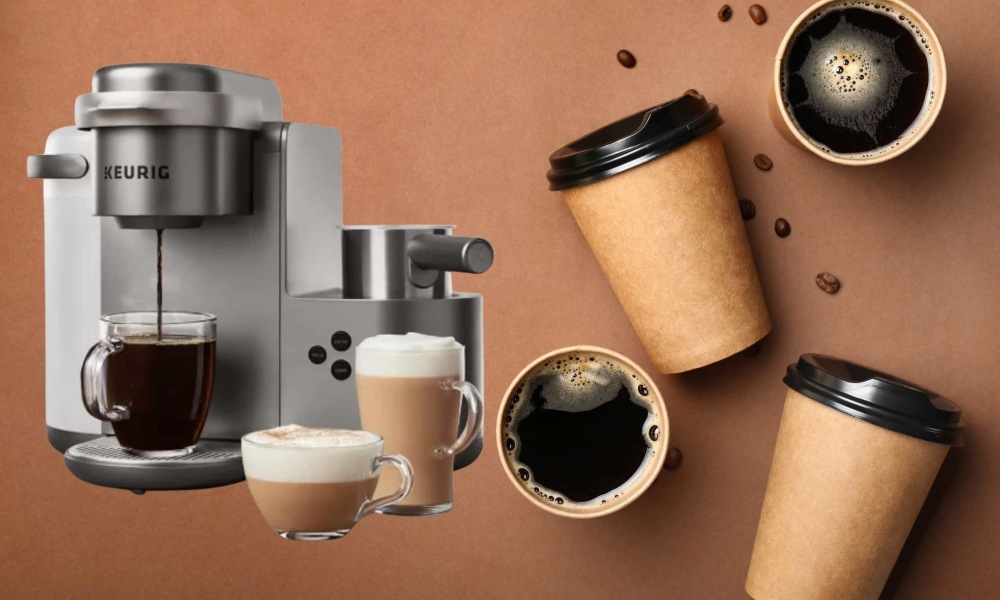
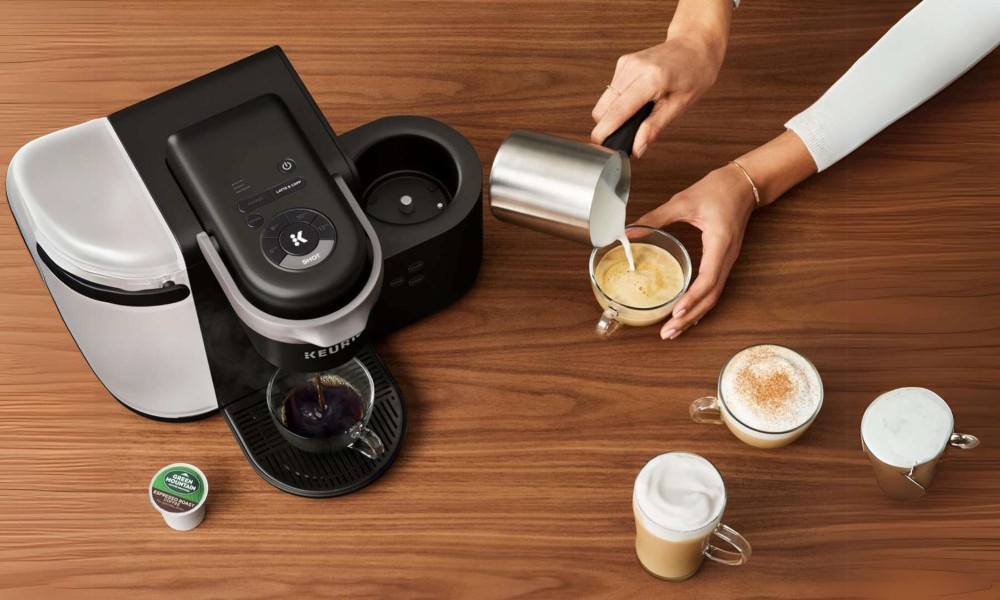
Recognizing the demand for espresso-style drinks, Keurig introduced the K-Cafe, a machine designed to produce stronger, more concentrated coffee shots that could serve as a base for lattes and cappuccinos.
Features of the K-Cafe
The K-Cafe includes a “Shot” button, which delivers a smaller, more concentrated serving of coffee. It also comes with a built-in milk frother, allowing users to create milk-based drinks reminiscent of those found in coffee shops.
While these features bring the Keurig experience closer to espresso-based beverages, there are still notable differences:
- Pressure: Even with the Shot function, the K-Cafe doesn’t reach the pressure levels of true espresso machines.
- Crema: The resulting shot may have a light foam, but it lacks the rich, persistent crema of authentic espresso.
- Flavor Profile: The concentrated shot is stronger than regular Keurig coffee but may not capture the full complexity of espresso.
The Crema Conundrum: A Key Difference
One of the most noticeable differences between Keurig “espresso” and traditional espresso is the crema – or lack thereof.
The Importance of Crema
Crema is more than just a visual indicator; it contributes to the overall sensory experience of espresso. This emulsion of oils and gases:
- Traps aromatic compounds, enhancing the coffee’s fragrance.
- Adds a creamy texture to the first sip.
- Provides a visual cue for freshness and proper extraction.
Keurig’s system, with its lower pressure and different extraction method, struggles to produce true crema. While some K-Cups may result in a light foam, it dissipates quickly and doesn’t provide the same sensory experience as authentic crema.
Espresso-Based Drinks: Keurig’s Approach
Despite the challenges in producing true espresso, Keurig has made strides in creating machines that can craft espresso-inspired beverages.
Lattes and Cappuccinos with the K-Cafe
The K-Cafe’s built-in milk frother allows users to create drinks that resemble lattes and cappuccinos. While these may satisfy those looking for a convenient at-home option, they differ from traditional espresso-based drinks in several ways:
- Base: The coffee base is stronger than regular Keurig coffee but lacks the intensity of true espresso.
- Milk Texture: The frother can create a decent foam, but it may not achieve the microfoam texture prized in high-quality lattes.
- Customization: Users are limited to the K-Cup flavors available, which may not offer the same variety as a traditional espresso setup.
For those prioritizing convenience and a reasonable approximation of coffeehouse drinks, the K-Cafe can be a satisfactory solution. However, coffee purists and those seeking authentic espresso experiences may find it lacking.
Environmental and Economic Considerations
When evaluating Keurig’s espresso capabilities, it’s worth considering the broader implications of choosing this system over traditional methods.
Pod Waste vs. Traditional Grounds
One of the most significant criticisms of Keurig and other pod-based systems is the environmental impact of disposable K-Cups. While Keurig has made efforts to produce recyclable pods, many still end up in landfills. Traditional espresso, using loose grounds, generates less packaging waste.
However, Keurig does offer reusable K-Cup filters, which allow users to fill their own grounds. This option reduces waste and provides more control over the coffee used, potentially improving the espresso-like results.
Cost Comparison: Keurig vs. Cafe-Bought Espresso
From an economic standpoint, making Keurig “espresso” at home is generally less expensive than buying from a cafe. However, when compared to using a traditional home espresso machine, the cost per cup can be higher due to the price of K-Cups.
Long-term investment analysis suggests that for serious espresso drinkers, a traditional machine might be more cost-effective over time, especially when factoring in the ability to use any coffee blend and the potential for creating a wider variety of authentic espresso-based drinks.
FAQs
1. Can Keurig machines make real espresso?
While Keurig machines can make strong, concentrated coffee, they don’t produce true espresso as defined by coffee experts. The lower pressure and different extraction methods result in a drink that lacks the characteristics of authentic espresso, such as rich crema and complex flavor profiles.
2. What’s the difference between Keurig “espresso” and traditional espresso?
The main differences lie in the extraction process. Traditional espresso uses high-pressure (9 bars) and finely ground coffee, resulting in a more intense flavor, fuller body, and distinctive crema. Keurig machines operate at lower pressures and use pre-ground coffee in pods, producing a strong coffee that lacks some of the nuanced characteristics of true espresso.
3. Is the Keurig K-Cafe worth buying for espresso lovers?
If you prioritize convenience and are satisfied with espresso-inspired drinks, the K-Cafe might be a good choice. However, if you’re a purist seeking authentic espresso, you may find it disappointing. It’s best suited for those who want a quick, easy way to make lattes and cappuccinos at home without the complexity of a traditional espresso machine.
4. Are there any Keurig hacks to make the coffee more like espresso?
Some users have experimented with using reusable K-Cups filled with finely ground espresso beans, running the machine twice on the smallest cup setting for a more concentrated shot, or using espresso roast K-Cups. While these methods can produce stronger coffee, they still won’t replicate true espresso due to the machine’s limitations.
5. How does the cost of Keurig “espresso” compare to cafe-bought espresso?
Making Keurig “espresso” at home is generally less expensive than buying from a cafe. However, when compared to using a traditional home espresso machine, the cost per cup can be higher due to the price of K-Cups. Long-term, investing in a traditional espresso machine might be more cost-effective for serious espresso drinkers.
Final Thoughts
After a thorough examination and consideration of various factors, we can conclude that while Keurig machines can produce a strong, concentrated coffee that may satisfy casual drinkers, they fall short of creating true espresso as defined by coffee experts and enthusiasts.
The Keurig system, particularly with models like the K-Cafe, offers a convenient way to make espresso-inspired drinks at home. For many, this compromise between authenticity and ease of use is perfectly acceptable. The ability to quickly craft a latte-like beverage with the push of a button has undeniable appeal in our fast-paced world.
However, for those desiring the full traditional espresso experience with rich crema, complex flavor profiles, and fine-tunable extraction, a dedicated espresso machine remains the gold standard.
0 Comments
Most Voted