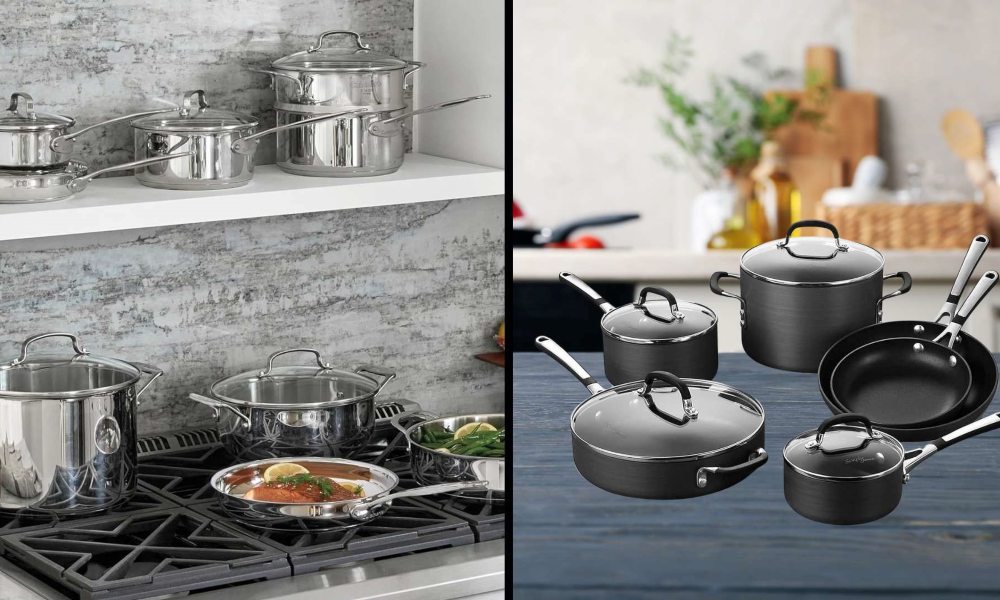
Calphalon vs Cuisinart | Unveiling the Cookware Champ

In the bustling world of culinary arts, where flavors dance and aromas enchant, the unsung heroes of the kitchen often go unnoticed. Yet, any seasoned chef or home cook will attest to the pivotal role that quality cookware plays in transforming raw ingredients into gastronomic masterpieces. Among the myriad of options available, two brands have consistently stood out, captivating the hearts and kitchens of food enthusiasts worldwide, Calphalon and Cuisinart.
These titans of cookware have been locked in a friendly rivalry for decades, each striving to outdo the other in innovation, durability, and performance. Calphalon, with its reputation for professional-grade cookware, has long been a favorite among serious home cooks and chefs alike. On the other hand, Cuisinart, a name synonymous with kitchen appliances, has carved out a significant niche in the cookware market, offering a blend of quality and affordability that appeals to a wide range of culinary enthusiasts.
As we embark on this culinary journey to unveil the cookware champion, we’ll delve deep into the nuances that set these brands apart. From the materials they use to construct their pots and pans, to the innovative technologies they employ for heat distribution, we’ll leave no lid unturned in our quest to determine which brand truly deserves the crown.
Whether you’re a professional chef looking to upgrade your kitchen arsenal or a home cook in search of the perfect stainless steel cookware set, this comprehensive comparison will equip you with the knowledge to make an informed decision.
The Culinary Titans Clash
Brief History of Calphalon and Cuisinart
Calphalon’s journey began in 1963 when it introduced hard-anodized aluminum cookware to the culinary world. Originally developed for the aerospace industry, this material revolutionized cookware with its durability and excellent heat conductivity. Over the years, Calphalon has expanded its range to include stainless steel cookware, nonstick options, and various kitchen utensils, always maintaining a focus on professional-grade quality.
Cuisinart, on the other hand, started its culinary conquest in 1971 with the introduction of the food processor to America. While initially known for appliances, Cuisinart ventured into cookware in the 1990s, quickly establishing itself as a formidable player in the market. Their approach has been to offer a wide range of cookware options that cater to different cooking styles and budgets, making quality kitchenware accessible to a broader audience.
The Importance of Quality Cookware in Modern Kitchens
In today’s fast-paced world, where home cooking has seen a resurgence, the significance of reliable cookware cannot be overstated. Quality pots and pans are not just tools; they’re investments in culinary creativity and dietary health. They can mean the difference between a perfectly seared steak and a sticky, burnt mess, or between evenly cooked rice and a pot with both mushy and undercooked grains.
Construction and Durability
1. Calphalon’s Signature Materials and Construction Techniques
Calphalon has built its reputation on hard-anodized aluminum cookware. This process creates a surface that’s harder than stainless steel, making it incredibly durable and resistant to corrosion. The Calphalon Classic line, for instance, features this hard-anodized construction, offering superior heat conductivity and durability.
In recent years, Calphalon has also made significant strides in nonstick cookware, developing multi-layer nonstick coatings that are more durable and longer-lasting than traditional options. Their premium lines often feature three-layer nonstick surfaces that are metal utensil-safe, a significant advantage for busy kitchens.
2. Cuisinart’s Approach to Cookware Materials
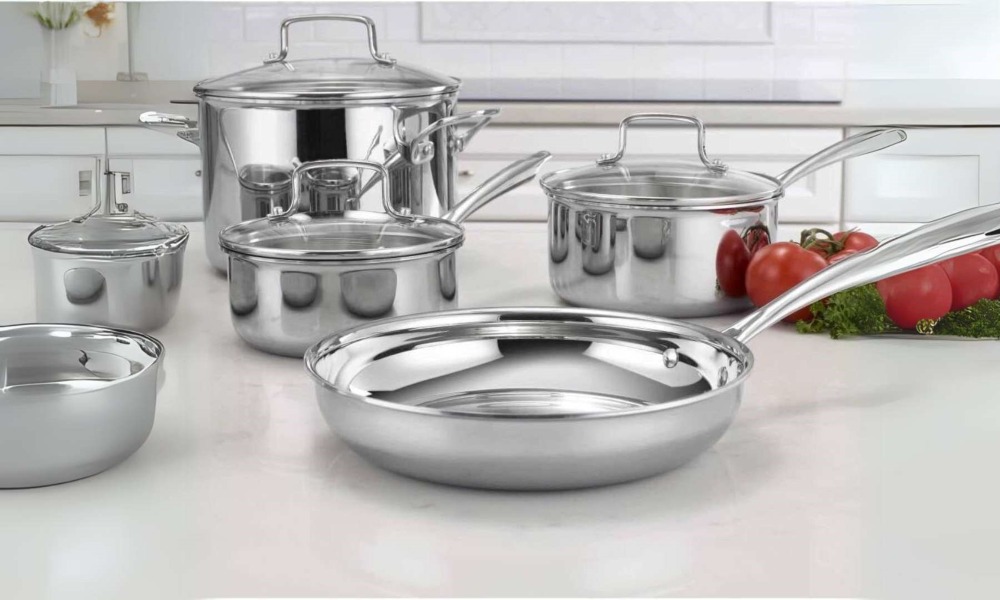
Cuisinart offers a diverse range of materials in its cookware lines. Their classic stainless steel cookware sets are popular for their durability and classic look. These sets often feature a tri-ply construction with an aluminum core sandwiched between stainless steel layers, providing excellent heat distribution.
Cuisinart has also embraced hard-anodized aluminum in many of its product lines, recognizing its superior cooking properties. Their nonstick options often feature a reinforced titanium-based coating, which they claim offers enhanced durability and scratch resistance.
3. Longevity and Wear-and-Tear Comparison
When it comes to longevity, both brands have their strengths. Calphalon’s hard-anodized cookware is renowned for its durability, often lasting for many years with proper care. Their nonstick coatings, particularly in higher-end lines, are designed to withstand the rigors of daily cooking.
Cuisinart’s stainless steel offerings are equally durable, with many users reporting years of reliable use. Their nonstick coatings, while generally good, may not have the same longevity as Calphalon’s premium options. However, Cuisinart often offers more affordable price points, which can make replacement less of a financial burden.
Heat Distribution and Retention
1. Calphalon’s Heat Management Technologies
One of Calphalon’s standout features is its ability to heat evenly across the cooking surface. Their hard-anodized aluminum construction is particularly effective at distributing heat, reducing hot spots that can lead to uneven cooking. The Calphalon cookware lines often incorporate heavy-gauge materials that heat up quickly and maintain temperature well, a crucial factor for techniques like searing or sautéing.
Many Calphalon pots and pans also feature a thicker base, which aids in heat retention and helps prevent warping over time. This design element is particularly beneficial for dishes that require consistent temperature maintenance, such as simmering sauces or slow-cooking stews.
2. Cuisinart’s Solutions for Even Cooking
Cuisinart has developed its own approach to ensuring even heat distribution. Many of their stainless steel lines feature a tri-ply construction with an aluminum core that extends up the sides of the cookware. This design promotes even heating not just on the bottom but also along the sides of the pot or pan.
For their nonstick and hard-anodized lines, Cuisinart often uses a technology they call “Heat Surround,” which aims to distribute heat evenly along the bottom and side walls of the cookware. This can be particularly beneficial for dishes that require consistent heat throughout, such as risotto or delicate sauces.
3. Real-World Performance in Various Cooking Scenarios
In practical terms, both brands perform admirably in a variety of cooking scenarios. For high-heat cooking like searing meats, Calphalon’s hard-anodized cookware often gets the edge due to its excellent heat retention and distribution. However, for tasks like simmering or cooking more delicate foods, Cuisinart’s tri-ply stainless steel offerings provide precise temperature control that many home cooks appreciate.
Non-Stick Capabilities
1. Calphalon’s Non-Stick Offerings and Innovations
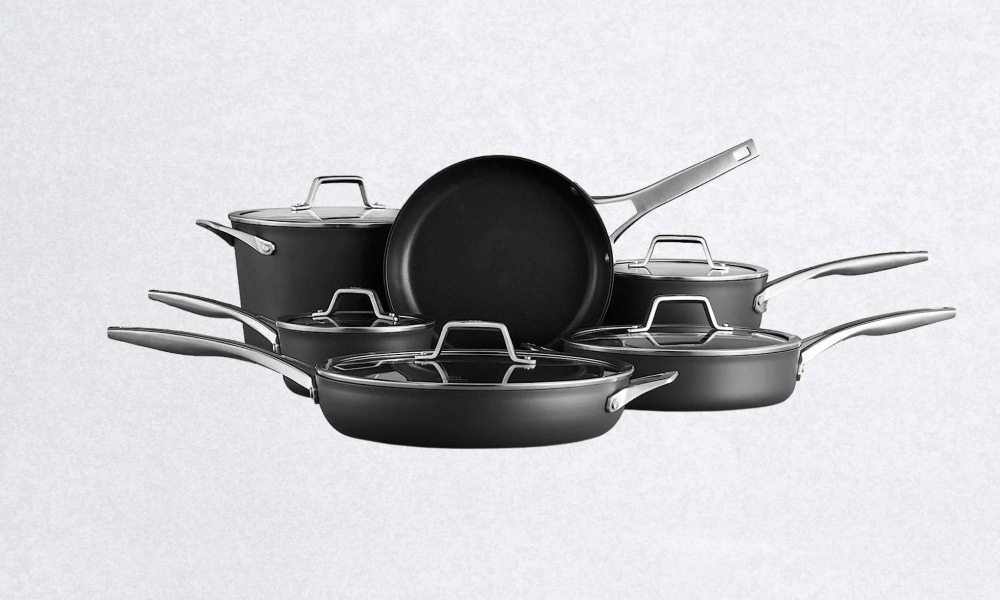
Calphalon has been at the forefront of nonstick technology for years. Their premium nonstick lines often feature a three-layer coating that’s designed to be durable and long-lasting. Many of these coatings are also metal utensil-safe, which is a significant advantage for those who prefer the versatility of metal tools.
The Calphalon Classic Nonstick line, for instance, uses a dual-layer nonstick interior that provides excellent food release and easy-to-clean properties. Higher-end lines may incorporate additional layers or special treatments to enhance durability and performance.
2. Cuisinart’s Take on Easy-Release Surfaces
Cuisinart offers a range of nonstick options, from budget-friendly choices to more premium offerings. Many of their nonstick pans use a reinforced titanium-based coating, which they claim offers enhanced durability and scratch resistance compared to traditional nonstick surfaces.
One interesting innovation from Cuisinart is their Ceramica XT nonstick coating, which is PTFE and PFOA-free, appealing to those looking for alternative nonstick options. This ceramic-based coating offers good food release properties and is often marketed as a more environmentally friendly option.
3. Durability and Longevity of Non-Stick Coatings
When it comes to the longevity of nonstick coatings, Calphalon often has a slight edge, particularly in their higher-end lines. Their multi-layer coatings tend to hold up well over time, even with regular use. However, this superior durability often comes with a higher price tag.
Cuisinart’s nonstick coatings, while generally good, may not have the same long-term durability as Calphalon’s premium options. However, they often offer a good balance of performance and affordability, making them an attractive option for those who don’t mind replacing their cookware more frequently.
Ergonomics and Design
1. Calphalon’s Approach to User Comfort and Aesthetics
Calphalon cookware is often praised for its ergonomic design. Many of their pots and pans feature long, stay-cool handles that are designed to provide a comfortable and secure grip. The handles are often made of stainless steel and are double-riveted for durability.
Aesthetically, Calphalon tends towards a sleek, professional look. Their hard-anodized cookware has a distinctive dark gray color that many find appealing, while their stainless steel lines offer a classic, polished appearance.
2. Cuisinart’s Design Philosophy and Practical Features
Cuisinart also places a strong emphasis on ergonomics and user-friendly design. Many of their cookware lines feature helper handles on larger pots and pans, which can be a significant advantage when handling heavier dishes. Their handles are often designed to stay cool to the touch, enhancing safety in the kitchen.
In terms of aesthetics, Cuisinart offers a wider range of styles to suit different tastes. From classic stainless steel to colorful enamel-coated options, Cuisinart provides more variety in terms of visual appeal.
3. Comparing Handles, Lids, and Overall Usability
Both brands offer pan with lid options that are well-designed for practical use. Calphalon’s lids are often made of tempered glass, allowing for easy monitoring of cooking progress. Cuisinart also offers glass lids in many of its lines, with some premium sets featuring stainless steel lids for added durability.
In terms of overall usability, both brands perform well, but personal preference plays a significant role. Some cooks prefer the heft and solid feel of Calphalon cookware, while others appreciate the lighter weight and versatility of many Cuisinart options.
Versatility: From Stovetop to Oven
1. Calphalon’s Range of Cooking Applications
Most Calphalon cookware is designed to be versatile, and capable of moving from stovetop to oven. Many of their lines are oven-safe up to 450°F (232°C), with some premium options safe at even higher temperatures. This versatility is particularly useful for techniques like searing on the stovetop and finishing in the oven.
Calphalon also offers a range of specialized pieces, such as grill pans and woks, expanding the cooking possibilities for home chefs.
2. Cuisinart’s Multi-Use Capabilities
Cuisinart matches Calphalon in terms of versatility, with many of their cookware pieces being oven-safe. Their stainless steel lines are often oven-safe to higher temperatures, sometimes up to 500°F (260°C). This high heat tolerance can be particularly useful for certain baking and broiling applications.
Cuisinart also offers a wide range of specialized cookware, including Dutch ovens, stovetop griddles, and more, catering to diverse cooking needs.
3. Oven-Safe Temperatures and Induction Compatibility
Both brands offer options that are compatible with induction cooktops, though it’s important to check specific product lines for this feature. In terms of oven-safe temperatures, Cuisinart often has a slight edge, with many of their stainless steel options safe at higher temperatures compared to Calphalon’s offerings.
Maintenance and Care: Keeping the Shine
1. Cleaning Requirements for Calphalon Products
Many Calphalon products, particularly their nonstick lines, are designed to be easy to clean. A simple hand wash with mild soap and warm water is often sufficient for day-to-day cleaning. For their stainless steel lines, Calphalon recommends using non-abrasive cleaners to maintain the polished finish.
While some Calphalon products are labeled as dishwasher safe, the company generally recommends hand washing to prolong the life of the cookware, particularly for nonstick items.
2. Cuisinart’s Approach to Cookware Maintenance
Cuisinart also emphasizes ease of maintenance across their product lines. Their nonstick cookware is generally easy to clean with simple hand washing. For their stainless steel products, Cuisinart provides guidance on dealing with discoloration and stuck-on food, often recommending a mixture of water and vinegar for tough cleaning jobs.
Many Cuisinart products are advertised as dishwasher safe, which can be a significant convenience factor for busy households.
3. Dishwasher Safety and Long-Term Care Instructions
While both brands offer dishwasher-safe options, it’s generally recommended to hand wash premium cookware to extend its lifespan. This is particularly true for nonstick cookware, where the harsh detergents and high heat of dishwashers can degrade the nonstick coating over time.
For long-term care, both brands recommend avoiding sudden temperature changes, using appropriate utensils (especially with nonstick surfaces), and storing cookware properly to prevent scratches and dents.
FAQs
1. Are Calphalon and Cuisinart cookware dishwasher safe?
Yes, both Calphalon and Cuisinart offer several lines of dishwasher-safe cookware. However, it is generally recommended to hand wash premium cookware, particularly nonstick items, to prolong their lifespan and maintain their quality.
2. Can Calphalon and Cuisinart cookware be used on induction cooktops?
Yes, both brands offer cookware that is compatible with induction cooktops. It’s important to check specific product lines and ensure that the cookware specifies induction compatibility.
3. What is the maximum oven-safe temperature for Calphalon and Cuisinart cookware?
Calphalon cookware is typically oven-safe up to 450°F (232°C), with some premium lines capable of withstanding even higher temperatures. Cuisinart cookware often has a higher oven-safe temperature, with many stainless steel options being safe up to 500°F (260°C).
4. Do Calphalon and Cuisinart offer a warranty on their cookware?
Yes, both brands offer warranties on their cookware. Calphalon typically provides a lifetime warranty on many of their products, while Cuisinart also offers lifetime warranties on several of their lines. It’s advisable to check specific warranty details for each product.
5. Which brand is better for professional chefs, Calphalon or Cuisinart?
Both brands are highly regarded and offer professional-quality cookware. Calphalon is often praised for its solid construction and ergonomics, while Cuisinart is known for its versatility and high heat tolerance. The choice between the two often comes down to personal preference and specific cooking needs.
Final Thoughts
As we reach the culmination of our culinary clash between Calphalon and Cuisinart, it becomes clear that crowning a single champion is no easy task. Both brands have demonstrated their prowess in crafting quality cookware that caters to a wide range of cooking needs and preferences. The choice between these two titans ultimately boils down to individual priorities and cooking styles.
Calphalon shines with its professional-grade construction, particularly in its hard-anodized and premium nonstick lines. Its cookware often offers superior durability and heat management, making it a favorite among serious home cooks and professional chefs. The higher price point of Calphalon products is often justified by their longevity and performance, making them a solid long-term investment for those who spend significant time in the kitchen.
In the end, the best cookware choice depends on your specific needs, budget, and cooking habits. If durability and professional-grade performance are your top priorities, and you’re willing to invest in your cookware, Calphalon might be your champion. If versatility, affordability, and a balance of performance and value are what you seek, Cuisinart could be the winner in your kitchen.
0 Comments
Most Voted