Santoku vs Chefs Knife | Blade Pros & Cons

In the culinary world, the choice of tools can make or break a chef’s performance. Among the myriad of kitchen implements, knives reign supreme, serving as extensions of a cook’s hands and vision. Two contenders often stand out in the realm of versatile kitchen blades: the Santoku and the Chef’s knife. Each boasts its own unique characteristics, strengths, and cultural heritage, sparking debates among cooking enthusiasts and professionals alike.
As we delve into the intricacies of these blade titans, we’ll uncover the nuances that set them apart and the tasks at which they excel. The Santoku, with its Japanese origins, brings precision and finesse to the cutting board, while the Western Chef’s knife offers robust versatility that has stood the test of time. But which one truly deserves the prime spot in your knife block?
In this comprehensive exploration, we’ll slice through the myths, sharpen our understanding, and carve out the truth about these culinary workhorses. Whether you’re a home cook looking to elevate your meal prep game or a professional chef seeking the perfect blade companion, this guide will equip you with the knowledge to make an informed decision.
Let’s get started!
The Kitchen Blade Showdown
The heart of any kitchen lies in its tools, and at the center of culinary craftsmanship stands the kitchen knife. Among the myriad options available, two types consistently rise to the top of discussions: the Santoku and the Chef’s knife. These blades, each with its own loyal following, represent different approaches to food preparation and cutting techniques.
The Santoku knife, a Japanese creation, has gained immense popularity in Western kitchens over the past few decades. Its name, which translates to “three virtues” or “three uses,” hints at its versatility in handling meat, fish, and vegetables. With its distinctive flat edge and sheepsfoot tip, the Santoku offers a unique cutting experience that many home cooks and professional chefs have come to appreciate.
On the other hand, the Chef’s knife, with its European roots, has long been the workhorse of Western kitchens. Its curved blade and pointed tip allow for a rocking motion that many find intuitive and efficient. The debate between these two knives isn’t just about preference; it’s about understanding how each blade’s design influences cutting techniques and overall kitchen efficiency.
Anatomy of a Santoku Knife
1. Blade Shape and Length
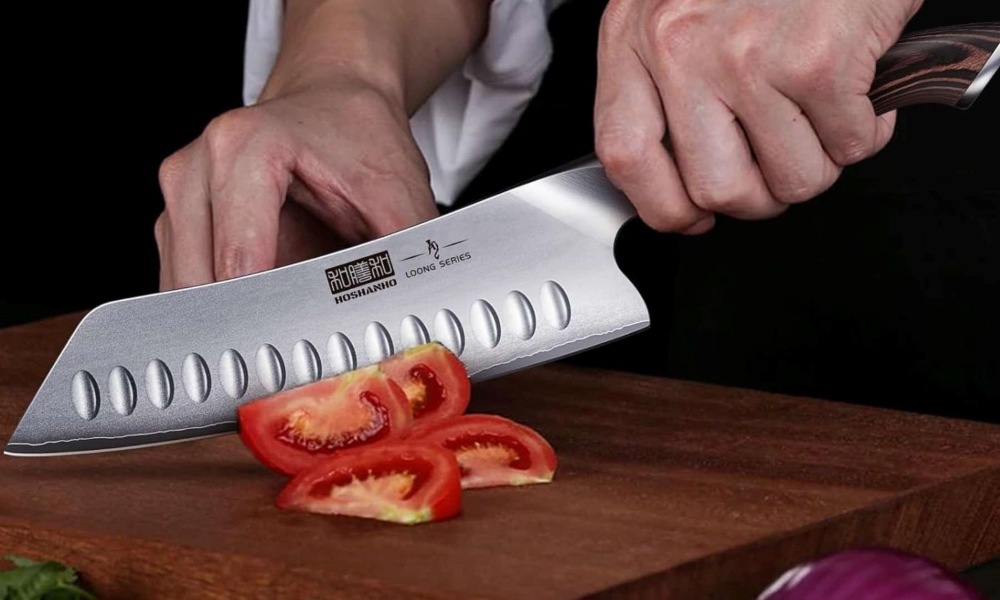
The Santoku knife is immediately recognizable by its distinctive shape. Typically ranging from 5 to 7 inches in length, it features a shorter blade compared to most Chef’s knives. The blade has a flat edge that runs almost the entire length before curving up sharply at the tip, creating a sheepsfoot profile. This design allows for clean, straight cuts and makes it easier to slice through ingredients with precision.
2. Edge Design and Grind
One of the key features of a Santoku is its edge grind. Many Santoku knives have a hollow ground or Granton edge, characterized by small indentations along the blade. These dimples create air pockets between the knife and the food, reducing friction and preventing ingredients from sticking to the blade. This feature is particularly useful when dealing with sticky foods like potatoes or apples.
3. Handle Characteristics
The handle of a Santoku is often designed with balance in mind. It’s typically made to complement the blade’s weight, ensuring that the knife feels comfortable and well-balanced in hand. Many Santoku handles are slightly shorter than those of Chef’s knives, contributing to the overall compact design of the knife.
4. Traditional Materials Used
Traditionally, Santoku knives were made with high-carbon steel, known for its ability to take and hold a sharp edge. However, modern Santokus are often crafted from stainless steel or high-carbon stainless steel, offering a balance between edge retention and ease of maintenance. Some premium Santokus may feature Damascus steel or other high-end materials, prized for both their performance and aesthetic appeal.
Anatomy of a Chef’s Knife
1. Blade Profile and Length Variations
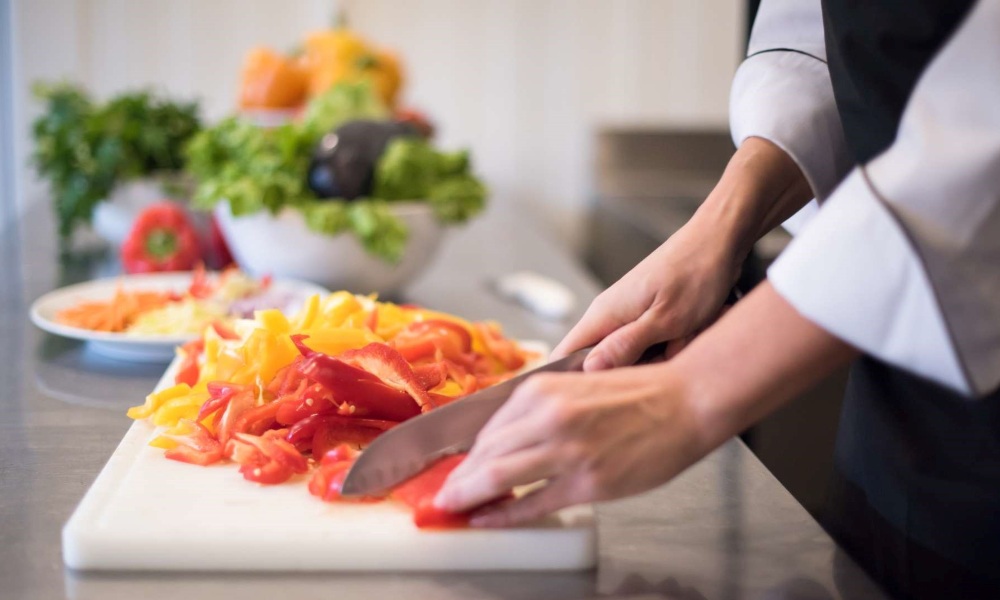
The Chef’s knife is characterized by its versatile blade profile. Typically ranging from 8 to 12 inches in length, it features a curve along the cutting edge that allows for a rocking motion when chopping. The blade tapers to a sharp point, which is useful for precision work and piercing. This design makes it easy to use a chef knife for a wide range of tasks, from mincing herbs to breaking down large cuts of meat.
2. Edge Geometry and Sharpening Angles
Chef’s knives usually have a V-shaped edge, with each side ground at an angle between 15 to 20 degrees. This geometry provides a balance between sharpness and durability. The edge is designed to be easily maintained and can be sharpened using a variety of methods, from whetstones to electric sharpeners.
3. Handle Designs and Ergonomics
The handle of a Chef’s knife is often longer than that of a Santoku, providing more leverage for heavy-duty tasks. Ergonomics play a crucial role in handle design, with many manufacturers offering contoured grips that fit comfortably in the hand and reduce fatigue during extended use. The balance point of a Chef’s knife is typically where the blade meets the handle, offering control and stability.
4. Common Materials in Modern Chef’s Knives
Modern Chef’s knives are made from a variety of materials. High-carbon stainless steel is popular for its balance of sharpness, durability, and corrosion resistance. Some high-end knives may use powdered steel or exotic alloys for enhanced performance. The handles can be made from wood, plastic, or composite materials, each offering different benefits in terms of grip, durability, and aesthetics.
Cutting Techniques: Santoku Mastery
1. Push Cutting and Chopping
When you use a santoku, the flat edge of the blade excels at push cutting. This technique involves pushing the knife straight down through the ingredient, rather than using a rocking motion. It’s particularly effective for creating clean, precise cuts in vegetables and boneless meats. The flat edge also allows for efficient chopping, where the blade is lifted entirely off the cutting board between cuts.
2. The “Up and Down” Motion
The Santoku’s design lends itself well to an up-and-down chopping motion. This technique is especially useful for finely mincing herbs or creating uniform pieces of vegetables. The blade’s flat profile ensures that all parts of the edge make contact with the cutting board simultaneously, resulting in even cuts.
3. Precision Work with the Santoku’s Flat Edge
The straight edge of the Santoku makes it ideal for creating thin slices of ingredients like cucumbers, tomatoes, or cheese. By drawing the knife straight back towards you, you can achieve consistent, paper-thin slices with ease. This precision is one of the reasons why many sushi chefs prefer Santoku-style knives for their work.
4. Optimal Foods and Ingredients for Santoku Use
While versatile, the Santoku particularly shines when working with:
- Vegetables: Its flat edge and sharp blade make quick work of produce.
- Boneless meats: The Santoku can create thin, even slices of chicken, pork, or beef.
- Fish: Its ability to make precise cuts is perfect for filleting and slicing fish.
- Herbs: The wide blade is excellent for mincing and chopping herbs finely.
Cutting Techniques: Chef’s Knife Versatility
Rocking Motion and Slicing
One of the defining characteristics of using a Chef’s knife is the rocking motion. The curved blade allows the cook to keep the tip of the knife in contact with the cutting board while rocking the heel up and down. This technique is efficient for tasks like mincing garlic or herbs. For slicing, the length of the blade allows for long, smooth cuts through meats and large vegetables.
Point Work and Tip Control
The pointed tip of a Chef’s knife offers precision control for detailed work. It’s particularly useful for tasks like removing seeds from peppers, scoring meats, or creating decorative cuts in fruits and vegetables. The tip can also be used to start cuts in tough-skinned produce like winter squash.
Leverage and Power Cuts
The length and weight of a Chef’s knife provide excellent leverage for more demanding tasks. When you need to cut through tough ingredients like winter squash or large cuts of meat, the Chef’s knife’s design allows you to apply more force efficiently. The weight of the blade itself aids in cutting, reducing the effort required from the user.
Wide Range of Ingredients Suited for Chef’s Knives
Chef’s knives are true all-rounders in the kitchen, capable of handling:
- Large vegetables: From cabbage to squash, the Chef’s knife can tackle big produce.
- Meats with bones: The sturdy blade can work around bones in cuts of meat.
- Herbs and spices: The rocking motion is perfect for finely mincing herbs.
- Fruits: From peeling to coring and slicing, it can handle various fruit prep tasks.
Performance Comparison
Vegetable Prep Face-off
Both knives excel in vegetable preparation but in different ways. The Santoku’s flat edge and hollow grinds make it superior for creating thin, uniform slices and preventing sticking.
It’s particularly effective with softer vegetables like tomatoes or bell peppers. The Chef’s knife, with its curved edge, is more efficient for quickly chopping large quantities of harder vegetables like onions or carrots, where the rocking motion can be fully utilized.
Protein Handling: Fish, Meat, and Poultry
For delicate proteins like fish, the Santoku’s precision and ability to create thin slices give it an edge. It’s excellent for filleting and creating sashimi-style cuts. When it comes to larger cuts of meat or poultry, especially those with bones, the Chef’s knife’s length and weight make it more suitable. It can more easily navigate around bones and joints, and its pointed tip is useful for trimming and detailed work.
Herb Mincing and Fine Chopping
Both knives are capable of finely mincing herbs, but they approach the task differently. The Santoku’s flat edge allows for an up-and-down chopping motion that can quickly reduce herbs to a fine mince. The Chef’s knife’s rocking motion is equally effective, and some users find it more intuitive for this task. The choice often comes down to personal preference and the specific herb being prepared.
Large Ingredient Breakdown
When it comes to breaking down large ingredients, the Chef’s knife generally has the advantage. Its longer blade and more substantial weight make it better suited for tasks like halving a watermelon or breaking down a whole chicken. The Santoku, while capable of these tasks, may require more effort due to its shorter blade length.
Maintenance and Care
Sharpening Differences Between Santoku and Chef’s Knives
The process of sharpening these two types of knives can differ slightly. Santoku knives often have a more acute edge angle, typically around 10-15 degrees per side, while Chef’s knives usually have a slightly wider angle of 15-20 degrees. This means that when sharpening a Santoku, you’ll need to maintain a shallower angle. Additionally, the flat edge of a Santoku can make it easier for beginners to maintain a consistent angle during sharpening.
Storage Solutions for Each Blade Type
Proper storage is crucial for maintaining the edge and overall condition of both knife types. Magnetic knife strips are an excellent option for both, as they keep the blades separated and easily accessible. Knife blocks are another popular choice, but ensure the slots are appropriate for the size of your knives. For Santokus, which are often shorter, you may need a block with some smaller slots. Always store knives in a dry place to prevent rust and corrosion.
Cleaning and Rust Prevention
Both Japanese knife types and Western Chef’s knives benefit from similar cleaning practices. Hand washing with mild soap and warm water is recommended, followed by immediate drying with a soft cloth. Avoid leaving either knife type in standing water or putting them in the dishwasher, as this can damage the edge and potentially lead to rust. For carbon steel knives, which are more prone to rust, applying a thin layer of food-grade mineral oil after cleaning can provide additional protection.
Longevity and Durability Factors
The longevity of both Santoku and Chef’s knives depends largely on the quality of materials and construction, as well as how well they are maintained. High-quality versions of both can last for decades with proper care. Santoku knives, being generally lighter and thinner, may require more careful handling to prevent chipping or bending.
Chef’s knives, with their thicker blades, are often more robust and can withstand heavier use. However, this doesn’t mean they’re indestructible; both types require respect and proper technique to ensure long-lasting performance.
FAQs
1. What is the key difference between a santoku and a chef knife?
The main difference lies in their blade shape and cutting motion. Santoku knives have a flatter edge ideal for up-and-down chopping, while Chef’s knives have a curved edge perfect for rocking cuts. Santokus are typically shorter and lighter, while Chef’s knives are longer and more versatile for heavy-duty tasks.
2. Can I use a Santoku knife for all kitchen tasks?
While a Santoku is versatile, it may not be ideal for all tasks. It excels at slicing, dicing, and mincing, especially with vegetables and boneless meats. However, for tasks requiring more force or a longer blade, like breaking down poultry or slicing large roasts, a Chef’s knife might be more suitable.
3. How often should I sharpen my kitchen knives?
The frequency of sharpening depends on usage, but generally, honing your knives with steel before each use and sharpening them every few months is a good practice. Professional chefs might sharpen their knives weekly, while home cooks might do so every 2-3 months.
4. Are expensive knives worth the investment?
High-quality knives can be a worthwhile investment for serious cooks. They often hold their edge longer, perform better, and can last a lifetime with proper care. However, mid-range knives can also perform excellently for most home cooks if well-maintained.
5. Can I put my Santoku or Chef’s knife in the dishwasher?
It’s not recommended to put any quality knife in the dishwasher. The harsh detergents and high heat can damage the blade’s edge and handle. Always hand wash your knives with mild soap, dry them immediately, and store them properly to maintain their quality and longevity.
Final Thoughts
As we’ve explored the intricacies of both the Santoku and Chef’s knife, it becomes clear that each has its strengths and ideal applications in the kitchen. The choice between these two culinary champions ultimately boils down to personal preference, cooking style, and the types of tasks you frequently perform in your kitchen.
The Santoku shines in precision work, excelling at creating thin slices and handling delicate ingredients with finesse. Its lighter weight and shorter blade make it a favorite for those who prefer more controlled, precise cuts. On the other hand, the Chef’s knife’s versatility and power make it an indispensable tool for a wide range of kitchen tasks, from fine herb work to breaking down large ingredients.
Perhaps the most enlightening conclusion is that there’s room for both in a well-equipped kitchen. Many cooking enthusiasts find that having both a Santoku and a Chef’s knife in their knife set allows them to tackle any culinary challenge with confidence. By understanding the unique properties and best uses of each, you can make an informed decision that will enhance your cooking experience and help you create culinary masterpieces with greater ease and enjoyment.
0 Comments
Most Voted